Strait of Hormuz Crisis: Iran–US Tensions and Their Impact on Global Oil Supply and Economy
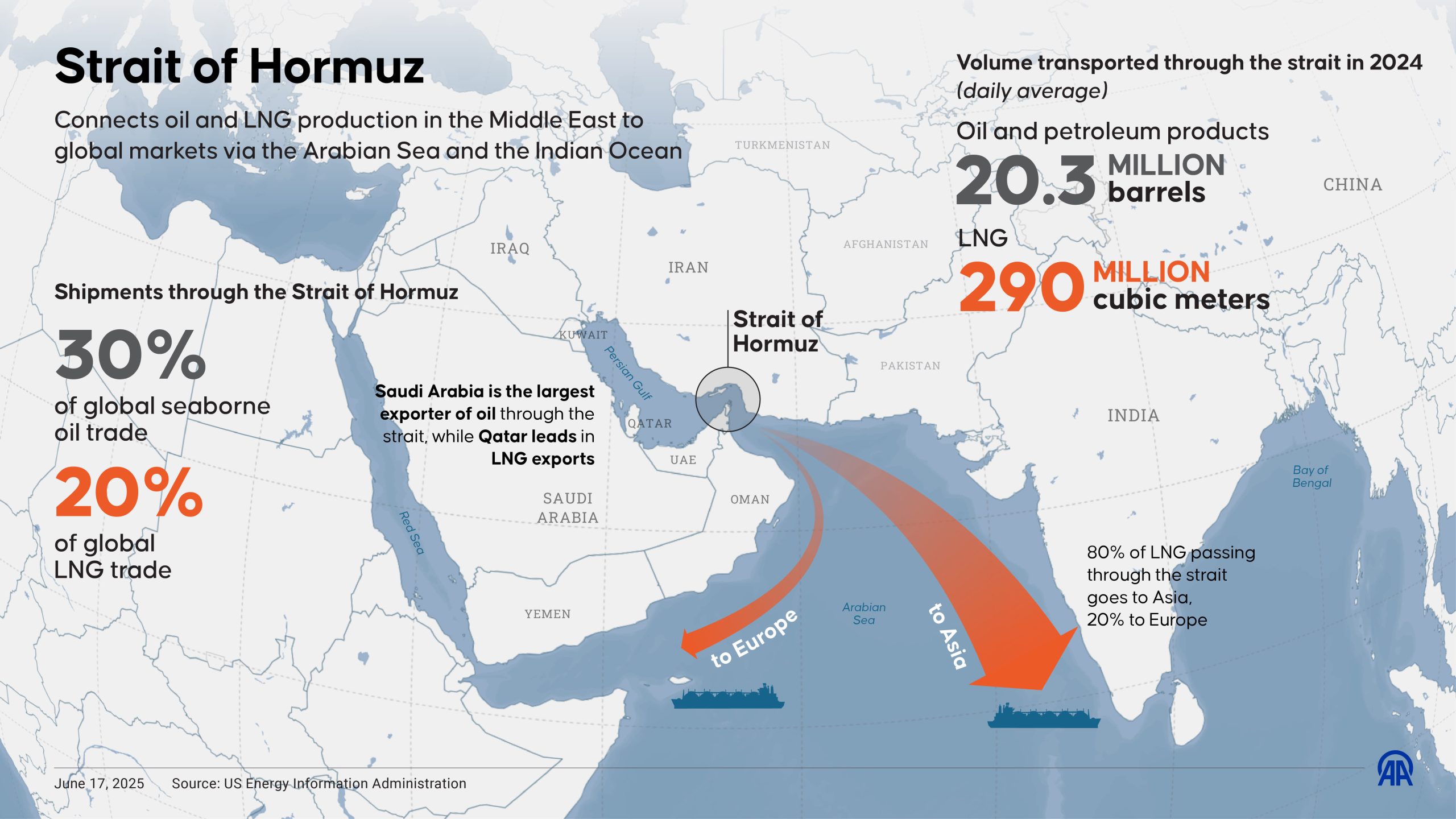
The ongoing tension between Iran and the United States has once again brought global attention to one of the most strategically important waterways in the world — the Strait of Hormuz. This narrow passage, located between the Persian Gulf and the Arabian Sea, plays a crucial role in international trade, especially in the transportation of oil and gas. Nearly one-fifth of the world’s petroleum supply passes through this route, making it a lifeline for the global energy market.
In recent developments, political and military tensions between Iran and the United States have increased concerns about the safety and stability of this region. The Strait of Hormuz has historically been a sensitive point due to its geopolitical importance, and even minor disruptions here can create serious consequences for global markets.
Importance of the Strait of Hormuz
The Strait of Hormuz is one of the most critical chokepoints in the world. Countries like Saudi Arabia, Iraq, Kuwait, the United Arab Emirates, and Iran itself rely heavily on this route to export oil to international markets. Tankers carrying millions of barrels of crude oil pass through this narrow waterway daily.
Because there are very few alternative routes available for large-scale oil transportation, any disturbance in this region can immediately affect global supply chains. This is why the Strait of Hormuz is often described as the “world’s most important oil passage.”
Rising Iran–US Tensions
The relationship between Iran and the United States has been strained for decades, but recent developments have increased uncertainty in the region. Issues such as economic sanctions, military presence in the Gulf, and disagreements over nuclear policies have all contributed to rising tension.
In the latest situation, increased monitoring of ships, military exercises, and warnings from both sides have created an atmosphere of fear in international waters near the Strait of Hormuz. Commercial shipping companies are now more cautious, and some oil tankers have reportedly altered their routes to avoid possible risks.
Iran has repeatedly stated that it will defend its territorial waters and respond strongly to any perceived threats. On the other hand, the United States and its allies have increased naval patrols to ensure freedom of navigation and secure oil transportation routes. This standoff has created a fragile balance where even a small incident could escalate into a larger conflict.
Impact on Global Oil Markets
One of the most immediate effects of this tension is seen in global oil prices. Oil markets are extremely sensitive to geopolitical events, and the Strait of Hormuz crisis is no exception. Whenever there is news of rising conflict or potential disruption in the region, oil prices tend to increase sharply.
Investors fear that if shipping is blocked or delayed, global oil supply will decrease, leading to shortages. As a result, crude oil prices often rise even before any actual disruption occurs. This uncertainty creates instability in financial markets and affects economies worldwide.
Countries that depend heavily on oil imports, such as many in Europe and Asia, are particularly vulnerable. Higher oil prices lead to increased transportation costs, electricity bills, and manufacturing expenses, which eventually contribute to inflation.
Global Economic Consequences
The impact of the Iran–US tension is not limited to oil markets alone. It has wider consequences for the global economy. Rising fuel prices increase the cost of goods and services worldwide because transportation becomes more expensive. This affects everything from food prices to industrial production.
Developing countries are especially at risk because they spend a larger portion of their national income on energy imports. Any sudden spike in oil prices can slow down economic growth and increase financial pressure on governments.
In addition, uncertainty in the region also affects global investment. Investors prefer stable environments, and geopolitical risks often lead to market volatility. Stock markets can react negatively, and currencies of oil-importing countries may weaken.
Shipping and Trade Risks
International shipping companies are also directly affected by the situation. The Strait of Hormuz is a vital passage for commercial vessels, and any threat to security increases insurance costs for ships passing through the area. Some companies may choose longer and more expensive routes to avoid risk zones, which further increases delivery time and costs.
Insurance premiums for oil tankers often rise during periods of tension, and this additional cost is eventually passed on to consumers in the form of higher prices.
Diplomatic Efforts and Future Outlook
Despite rising tensions, international diplomatic efforts are ongoing to prevent further escalation. Several countries and global organizations are encouraging dialogue between Iran and the United States to reduce conflict and ensure safe navigation in the Strait of Hormuz.
Experts believe that both sides understand the global importance of this waterway and are unlikely to allow a full blockade. However, the situation remains unpredictable, and even small incidents could trigger serious consequences.
In the long term, countries around the world are also considering reducing their dependence on oil transported through risky routes. Investment in renewable energy sources such as solar and wind power is increasing, as governments aim to create more stable and sustainable energy systems.
Conclusion
The Iran–US tension surrounding the Strait of Hormuz is not just a regional conflict but a global economic concern. Because this narrow waterway is responsible for a significant portion of the world’s oil supply, any disruption can have far-reaching effects on energy prices, trade, and economic stability.
While diplomatic solutions are being explored, the situation highlights how interconnected the modern world is, where a conflict in one region can impact economies across the globe. Stability in the Strait of Hormuz is therefore essential not only for the Middle East but for the entire international community.